A cyst is a closed, fluid-filled sac that can form anywhere in the body; and can contain liquid, gas, or semi-solid material. When a cyst develops on the ovary, or within it, is called an ovarian cyst.
Ovarian cysts are pretty common, in fact most people with a uterus develop at least one non-cancerous cyst from a normal menstrual cycle without symptoms. Even though most ovarian cysts are painless and often go unnoticed, certain types of ovarian cysts can cause pain and discomfort. While most ovarian cysts are benign (non-cancerous) and go away on their own, there can still be complications like rupture, torsion, or bleeding, which can be serious and require medical attention.
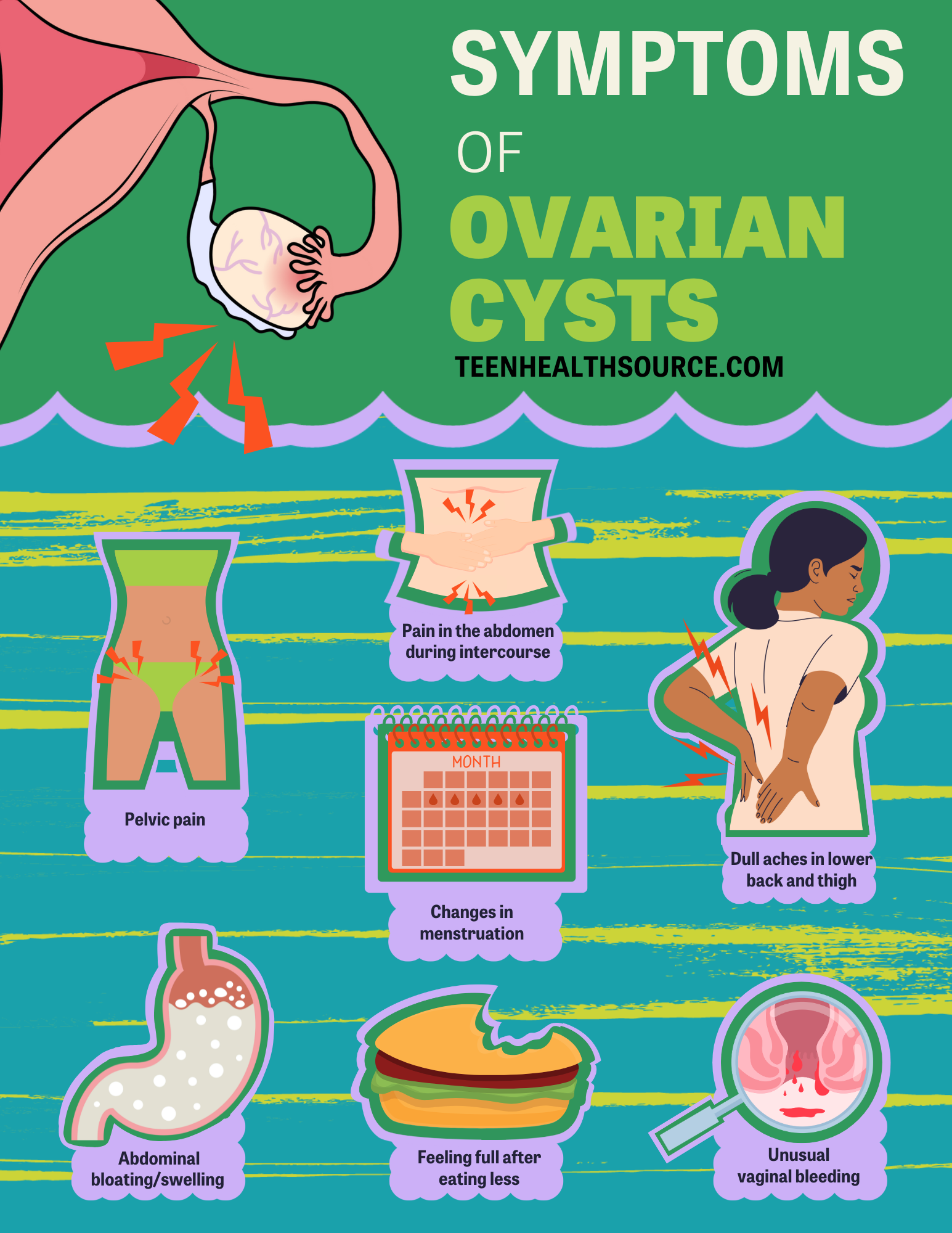
Although most people with ovarian cysts may not experience any symptoms at all, cysts can still cause a wide range of symptoms:
NOTE:
Symptoms of ovarian cysts may be difficult to detect because they mirror symptoms of urinary tract infection and menstruation. The only way to know for sure if you have ovarian cysts or not is to talk to a healthcare professional like a family physician.
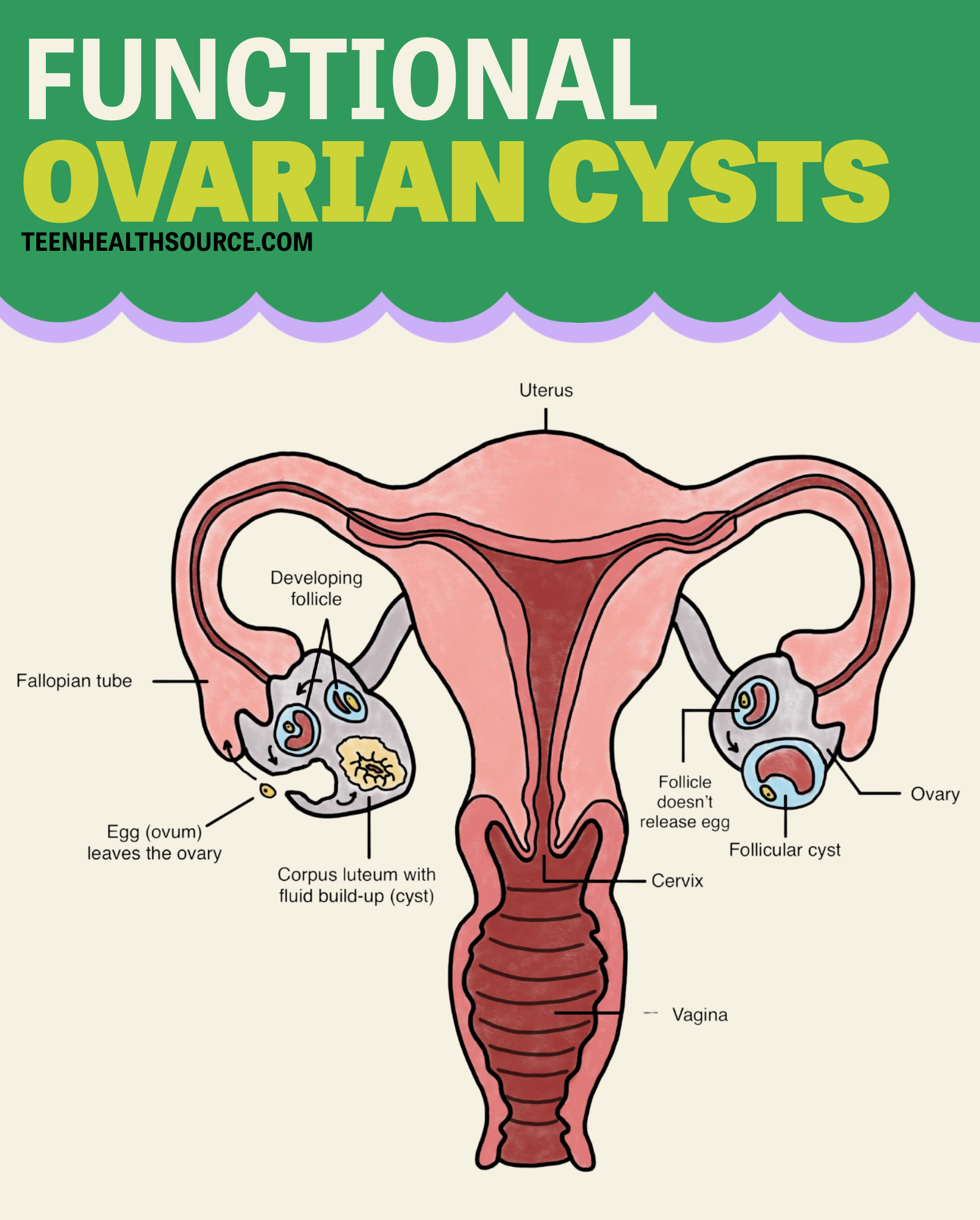
There are two major types of ovarian cysts: functional and pathological. Functional cysts are the most common as they appear during the menstrual cycle. They are non-cancerous and often not painful, usually resolving themselves within around 60 days. Some specific examples of functional cysts are follicular and corpus luteum cysts (they do not grow on/in the uterus).
Pathological cysts may require more attention because they may be benign (non-cancerous) or cancerous, depending on their location and what caused them. They grow on or in the uterus. Even though a pathological cyst is non-cancerous, it may still cause pain or discomfort. The pain can range from a dull ache or a sharp pain in the lower abdomen area, depending on if the cyst is growing, bursting, or causing the ovary to twist.
Sometimes the pain can become so intense that immediate medical attention is needed. So, while some cysts may not seem dangerous, they can still be a big deal when it comes to how they affect your body and how you feel. Below are some examples of cysts that can cause pathological symptoms:
The diagnosis process of ovarian cysts can vary a lot based on a person’s medical history, physical condition, and the types of cysts suspected to be there. However, here are some tests that you may expect:
In most cases, functional ovarian cysts will go away on their own after a few months. Doctors may suggest something called “watchful waiting”, where there will be regular ultrasound scans and blood tests over a year, after discovering a functional ovarian cyst.
A surgical procedure that removes ovarian cysts called laparoscopy may be suggested if the cyst is pathological or too large that it will interfere with your daily life.
If you’re experiencing any severe pain, or pain that’s getting in the way of living your life even after a diagnosis or a suggestion of watchful waiting, seek medical attention right away. Just because ovarian cysts are common does not mean you have to suffer through discomfort!
You deserve to have a healthcare professional who listens to your concerns about potential ovarian cysts seriously. Unfortunately when it comes to ovarian-related pain you may have to advocate for yourself a bit more, which might mean asking for specific tests, or requesting that your doctor make a note that they denied your requests if they say no.
If you find that your doctor is being dismissive or refusing to look into the cause of your symptoms, you may want to look for another doctor, seek a specialist, or visit a women’s health clinic (they are often gender inclusive and focus on treating people with uteruses).
Trust your understanding of your body; if your pain is interfering with your daily life, it is a good idea to do what you can to be treated properly and seriously to manage your pain.
If you have questions about this topic, feel free to contact one of our peer educators. [Link]
Last Updated: January 2026
People give a lot of reasons for why they don’t like using condoms. But are these reasons legit? This post explores some of the things people say to get out of using condoms, and also offers up some solutions to work through the excuses!
For this article, one of our volunteers did anonymous interviews with 3 teenagers all about the question: To what extent does culture and society play a role in youth sexuality?
Find out more about the Trans & Gender-Diverse Community Working Group, hosted by LAMP Community Health Centre.