There are many different ways to experience gender beyond the binary of female or male. So many terms describe people who don’t identify with being female or male like genderqueer, agender, bigender, genderfluid, two-spirit, etc! You can check out the Teen Health Source “Definitions” page for more information on those, but note that our definitions just offer one understanding of how they may be used, your version might be different! This article is all about being non-binary which can be used as an umbrella term that most of those other terms fall under.
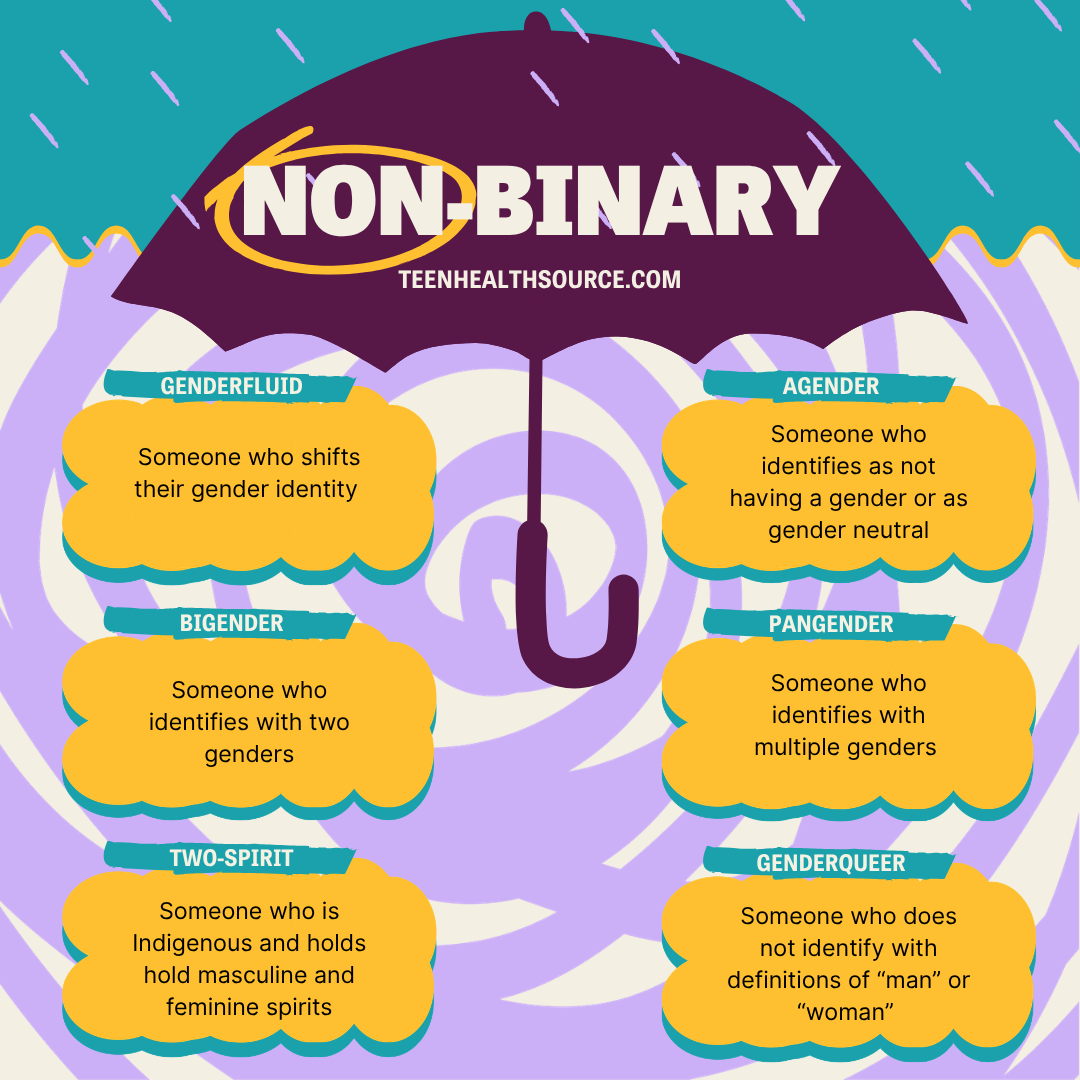
Being non-binary basically means that someone does not identify as male or female. Someone who is non-binary can identify with a mix of genders or none! There are so many gender identities beyond female or male which is why non-binary is a term that covers other gender identities like genderqueer, agender, bigender, genderfluid, and sometimes more culturally specific terms like two-spirit, etc.
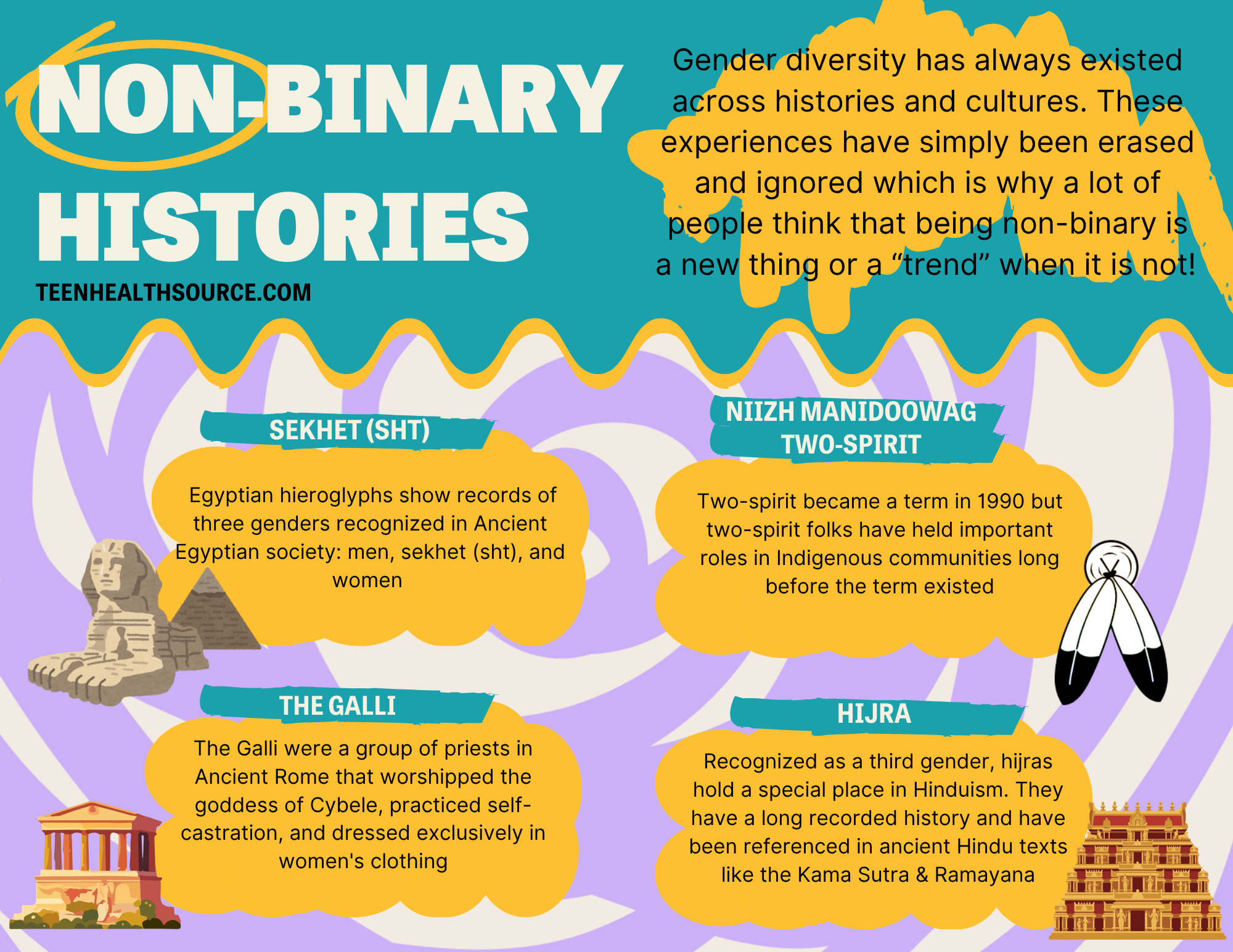
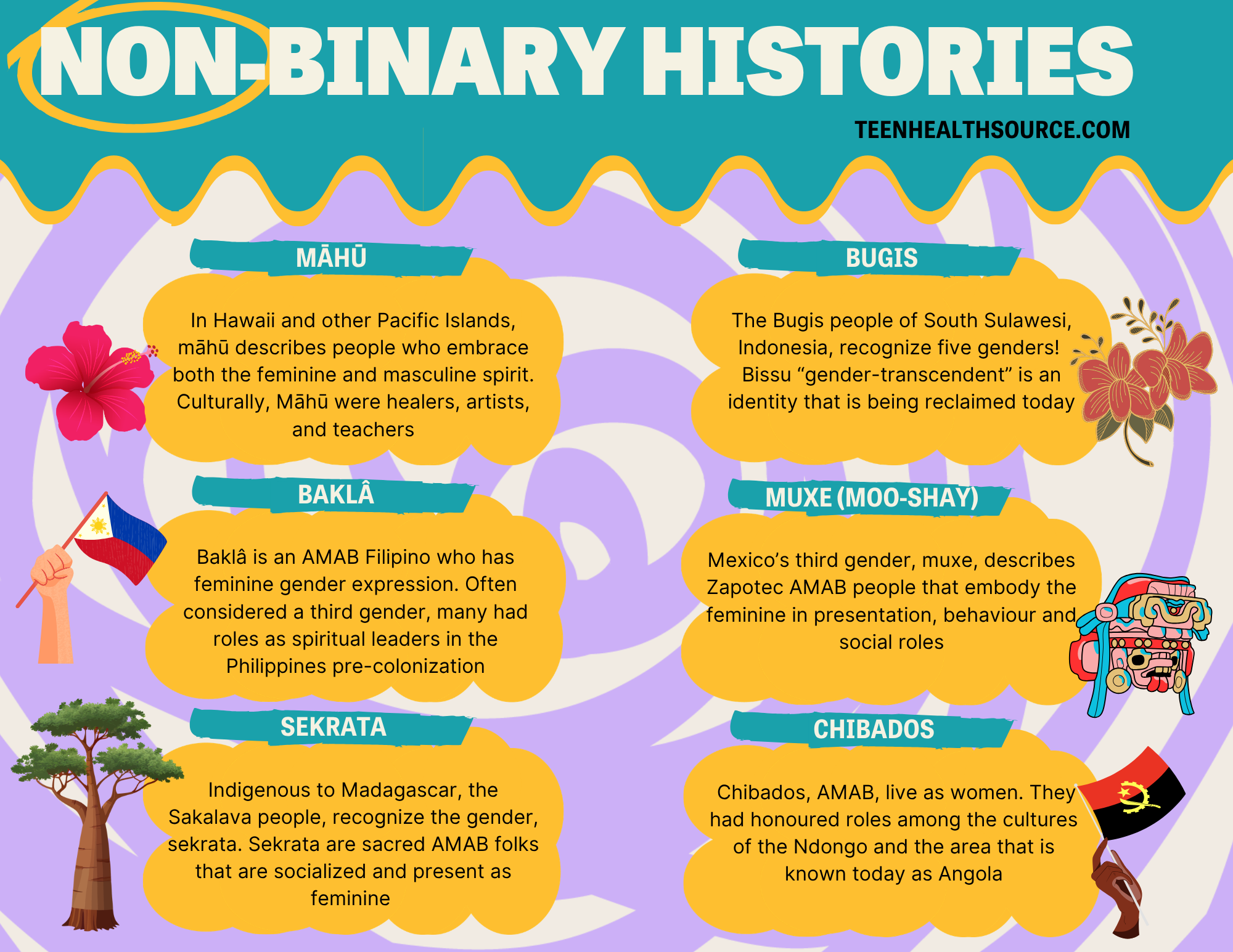
While the term non-binary might be more recent, gender diversity has always existed across histories and cultures. These histories were often forcibly erased as a result of colonization, which regularly used violence to control the behaviour and gender expression of the people being occupied. Our current idea of gender in the West comes from this colonial idea of man and woman, but many Indigenous and non-Western cultures have long rich relationships with gender diverse people.
It’s also important to note that while we talk about third genders across the world in the same conversation as non-binary identities, many terms are culturally specific and don’t really translate well into our understanding of gender identity. For example, someone who identifies as Sekrata may not also identify as non-binary even if we feel like there are similarities. Many of these terms also don’t apply outside of the cultures they come from, two-spirit as a term is specific to Indigenous people, as it’s informed by their cultural histories and relationship to spirituality–some even reject the term and consider it to be a colonial answer to an Indigenous concept.
We get that this can all sound a bit complicated, but a good rule of thumb if you’re looking for a term to describe your identity is to look into your own cultural background–there may be a way of identifying that your culture has been using for hundreds of years!
Being non-binary has to do with identity and how someone experiences gender. Not with how someone looks/presents themselves to the world or expresses their gender. Someone who is non-binary can be feminine, masculine, androgynous, or fluid. There is no one way to be non-binary! How someone expresses themselves can depend on a ton of factors, including personal safety. Usually asking someone which pronouns they use is a good way of making sure you don’t accidentally misgender them.
While the term non-binary may often be described as existing under the trans umbrella, not all non-binary people identify as trans. Usually this is because being transgender means identifying with a gender other than the one you were assigned at birth, which wouldn’t necessarily apply to people who don’t identify with any gender at all. Still, lots of non-binary people do identify as trans and feel that transness for them means being a gender diverse person. There are a lot of different ideas about how these terms can be used, and there really isn’t a right answer. Like most conversations about terminology and identity, labels are meant to help you better understand who you are, if you find the terms aren’t working for you, don’t use them!
Non-binary is not the same thing as being intersex. Intersex is a term to describe people that have chromosomes or anatomy that go beyond traditional definitions of female or male. Some intersex folks identify as being non-binary or gender diverse, but others don’t consider themselves part of the community at all.
We said it before, and we’ll say it again. There just isn’t one agreed upon way to be non-binary. Any singular definition is going to end up excluding a LOT of people who find it doesn’t work for them, that’s why you see so many terms under the non-binary umbrella. Sometimes we want specific terms to speak to our experiences, and sometimes we use broader terms because we just find that language doesn’t quite catch everything. The important thing is to respect the terms people want to use, and not try to impose your understanding of things on others–especially because our understanding of things changes all the time!
If you have questions about this topic, feel free to contact one of our peer educators. [Link]
Last Edited: July 2026
Check out our list of some health resources in Toronto that focus on providing culturally-specific and inclusive care to Black youth in Toronto!
Talking about sex with your parents (or a legal guardian) can feel extremely awkward. This article covers some tips for brining up and navigating sexual health convos with parents or trusted adults in your life.
In this article we cover some of the first questions people often have when trying to understand how their partner being ace may or may not impact their relationship.