People who get periods know how much the week before your period starts can suck! You might deal with a rollercoaster of emotions 0r other annoyances like acne and headaches. These symptoms, collectively known as premenstrual syndrome (PMS), shouldn’t be debilitating enough to impact your life at school, work, home, or your relationships. If that’s the case, there’s no shame in seeking help!
While doctors and other people in your life may write off what you’re experiencing as “typical period troubles,” that doesn’t make your concern or pain any less valid. If the symptoms before your period are especially difficult to manage, it could be due to premenstrual dysphoric disorder (PMDD), a more severe form of PMS.
Both PMDD and PMS symptoms begin about 7-10 days before your period and last for the first few days of it, but PMDD comes with more emotional and behavioural disruptions. For example, someone with PMS may feel quite low in the days leading up to their period and cry a lot more than usual, but someone with PMDD would become so sad that they’re bedridden and experiencing suicidal thoughts. While the exact cause of PMDD isn’t fully understood yet, it may be due to how your period’s hormonal changes can cause a deficiency of serotonin, a chemical in your brain and intestines that affects mood. Those who have mood disorders like depression, a family history of PMDD, or who smoke cigarettes a lot are more likely to develop it.
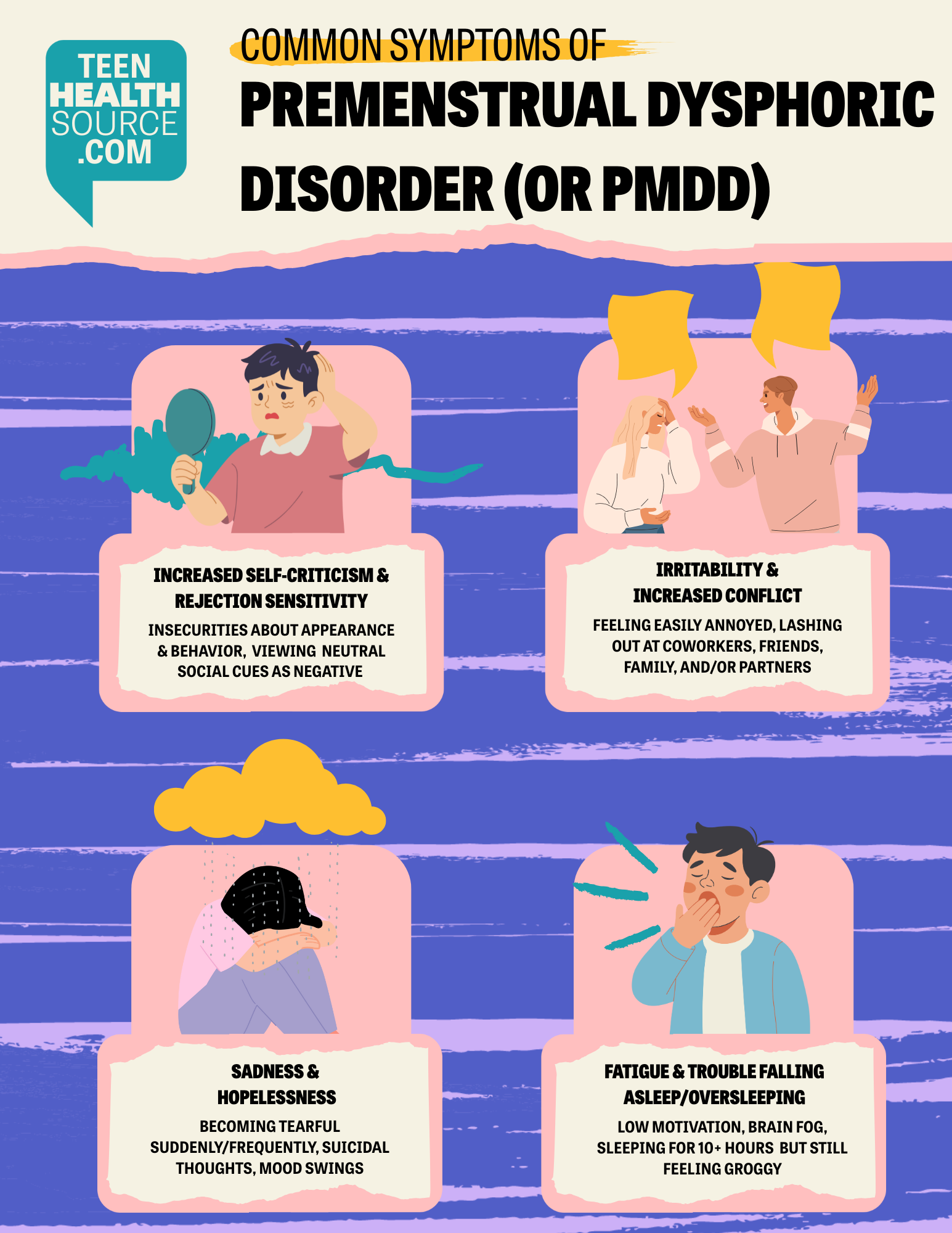
Common symptoms include:
PMDD can resemble thyroid disorders, depression, and anxiety, but if you think you have symptoms of it, it’s worth looking into. This might mean seeking out a second opinion if you feel like you’re not being taken seriously when you first mention this to a doctor, other medical professional, or a parent/guardian.
The criteria for diagnosis is as follows:
To receive a diagnosis, your doctor will recommend that you track your mental health and physical symptoms daily over the course of several months. Tracking how you feel for several months without receiving treatment can be difficult, so consider using a journal, an app that you can set reminders, or the resource we highlight below to make it easier to remember. It’s important to track this way because there are no lab tests (ex: blood, hormone, saliva) that can give you a diagnosis of PMDD. Lab tests can only rule out physical conditions like hormonal imbalances. Additionally, PMDD is directly tied to your menstrual cycle, so making note of when the symptoms happen is especially helpful for diagnosis.
The International Association of Premenstrual Disorders (IAPMD) has created a free downloadable sheet called the Daily Record of Severity of Problems (DRSP). Every day for one month, you check off what symptoms you’re experiencing (i.e.: irritability, increased appetite) and rate how severe each one is. Because you’ll have to do symptom tracking for at least two cycles, print out two sheets. You can find the DRSP here: https://www.iapmd.org/shop/p/iapmd-pmds-symptom-tracker
While PMDD can’t be cured, there are plenty of options for treating it, remember to talk to your doctor or a physician before starting any new medication or supplement:
We strongly advise you to follow the directions of your doctor, especially when taking antidepressants, supplements, and birth control pills. All of these can have an adjustment period and serious side effects!
If you have questions about this topic, feel free to contact one of our peer educators. [Link]
Last Updated: January 2026
Check out our list of some health resources in Toronto that focus on providing culturally-specific and inclusive care to Black youth in Toronto!

Learn more about Black History Month with Teen Health Source and TEACH! Listen to Paula and Stuart talk about Black queer history, political identities, ballroom culture and more!
It’s common to feel a bit lost or unsure if you’re questioning your gender identity or sexual orientation. Here’s a couple of ideas that might help make Questioning more comfortable!