
There are lots of reasons someone may not want to be touched during intimacy like sex or cuddling, but that doesn’t mean that they aren’t still capable of experiencing intimacy with themselves of a partner in a way that feels, comfortable, safe, and fun! This post goes over exactly what sensory sensitivity is, how to figure out if it’s something that you might be dealing with, and some tips for making intimacy more comfortable if you do!
We all have a base level of how we perceive the world with our senses. Generally we have an understanding of when a smell is too overwhelming, or there are too many conversations going on at once. Sensory sensitivity is when that base level shifts from what we might describe as typical, to something more intense.
You might already know about the 5 senses: sight, sound, touch, smell, and taste, but we can also experience the world with a few other senses like movement (think motion sickness), balance, and something called internal body awareness (like when you’re hungry or thirsty)! All of these senses can be dulled or heightened depending on a number of factors like:
Sensory sensitivity doesn’t just go one way either, any time you’re not experiencing the world in a way that is normal for you could fall under this category. We usually break it down into two categories: hypersensitivity and hyposensitivity. Basically feeling things really intensely, or not really feeling things at all.
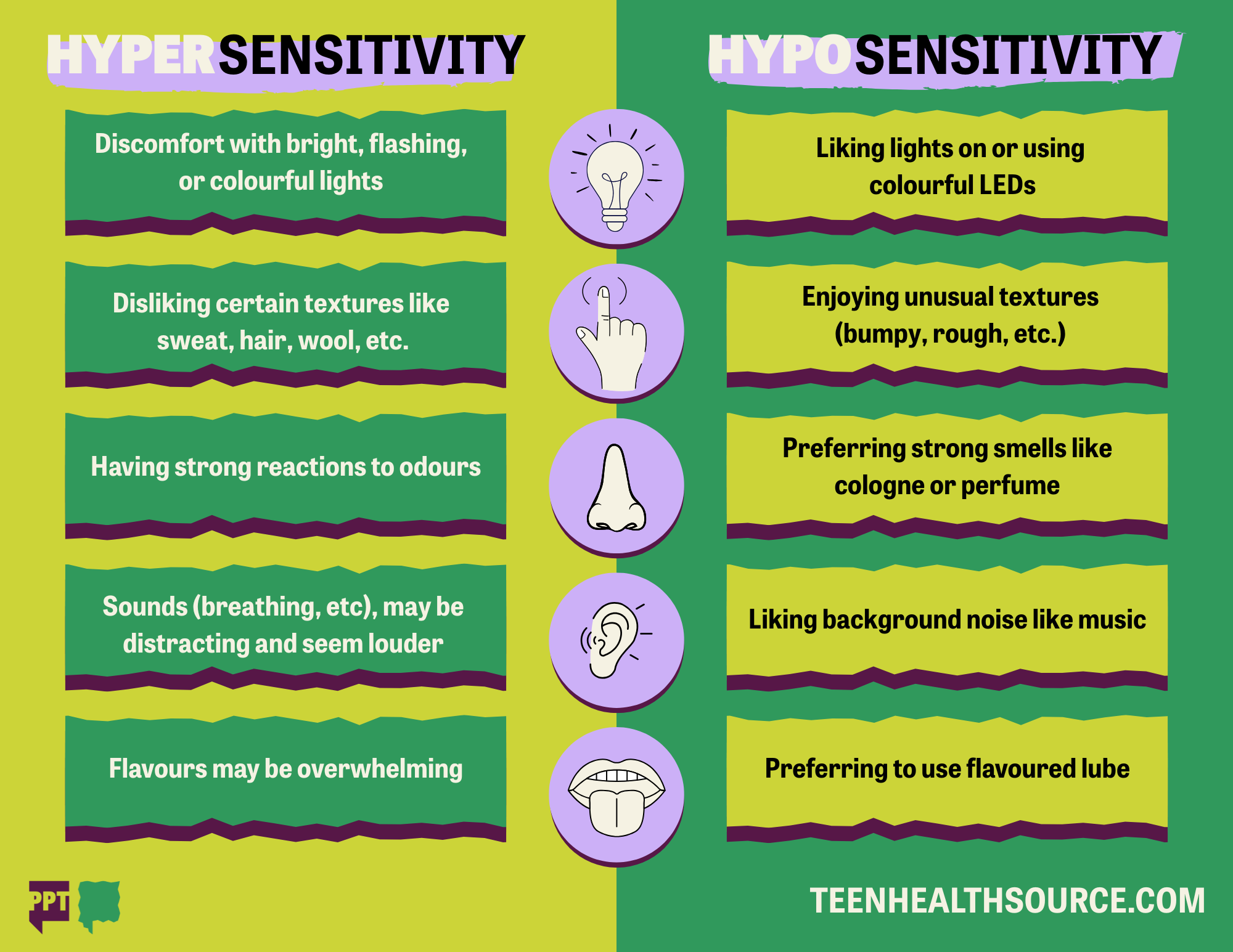
Hypersensitivity refers to when you’re feeling more sensitive to stimuli in your environment, in the context of intimacy, you might notice:
Hyposensitivity, on the other hand, is experiencing a lowered sensory response, like things that you usually enjoy or that cause you to have a response just don’t seem to be doing much for you. If these sound familiar, you might have experienced it yourself:
It is also possible for you just to be experiencing an “off day”! Feeling tired, hungry, or just not in the mood, are all pretty normal experiences which can be part of the reason you don’t enjoy being touched. When we think about hypo- or hypersensitivity, we’re thinking about patterns of these feelings, or instances when they come up without much reason.
Gender dysphoria and body dysmorphia could also play a part in how comfortable you are with touch. Sex and other physical types of intimacy can bring a lot of new and possibly uncomfortable attention to parts of your body you might not be used to or might not want to bring attention to. For example, someone who is transmasc may not want to have a lot of attention paid to their chest.
Gender dysphoria: distress or discomfort from your assigned sex at birth being different from your gender identity (the gender you were given at birth vs the gender you feel) Common signs of gender dysphoria can include:
Body dysmorphia: feeling strongly that there’s something wrong with your appearance. Common signs of body dysmorphia can include:
If this is sounding familiar to you, you may want to check out our post on Navigating Sex and Gender Dysphoria that covers it more in-depth!
Sensory sensitivity is different for everyone, and what might work for someone else may not work for you. It can be helpful to try to understand your own needs, and go from there. You deserve to explore intimacy in ways that feel right for you either alone or with your partner(s). It might feel awkward at first, but it’s a new experience, and it doesn’t need to be completely serious–laughing about it can even help you work through it together in a lighthearted way! Here are some things to think about that might help you develop tools to work through your sensitivities:
While some people may enjoy being touched during intimate moments, it looks different for everyone. You may enjoy cuddling but dislike kissing when you’re intimate with someone, or like having someone else touch you but dislike touching yourself, etc. Sexuality is fluid, and the way you experience it can change and look different as time goes on. Having sensitivities doesn’t mean there’s a problem, and some days you may feel more sensitive to stimuli than others.
You might also just not be very interested in physical touch, and that’s totally okay! Intimacy doesn’t have to involve touch to be meaningful; spending time together, talking, doing things for one another, or even little gifts can be your way of showing affection to both yourself and/or your partner(s).
If you have questions about this topic, feel free to contact one of our peer educators. [Link]
Last Edited: November 2025

What’s up with withdrawal? People often feel guilty or nervous when they use it as a method of birth control, but does it actually work?

Crisis pregnancy centres (CPCs) are clinics that look like real health centres, but are actually run by anti-abortion organizations that try and persuade people to not get abortions. Check this article out to learn more about them!