Uterine fibroids are a fairly common condition where tumors made out of muscles grow in or on the uterus. They are almost always non-cancerous and can vary in size, from undetectable tiny seedlings to large masses that can actually affect the shape or position of a uterus.
Uterine fibroids are also known as leiomyomas or myomas. They can be painful, but the severity, type, and location of the pain, can vary a lot. They can also put pressure on surrounding organs which can cause pain or other issues like chronic inflammation, or cause the uterus to contract more forcefully during menstruation resulting in more painful cramps.
Fibroids often go under-diagnosed because the symptoms tend to mirror so many other issues, or because it may be dismissed as typical menstrual pain. We’ll talk through some possible symptoms to look out for, how or why fibroids form, and what sort of treatment options are available!
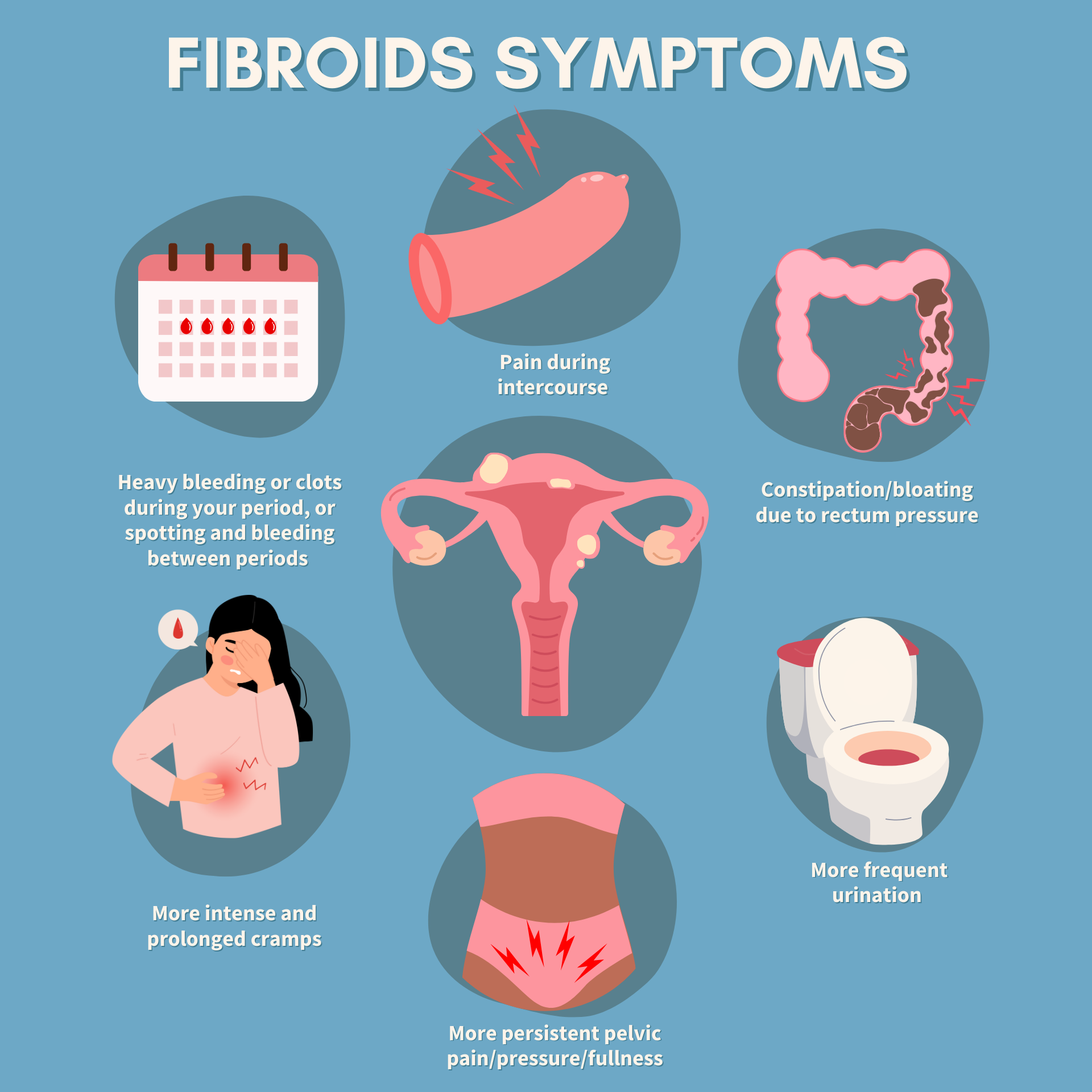
Uterine fibroids can cause a range of symptoms, though most people with fibroids may not experience any symptoms at all. Some common symptoms include:
The exact cause of uterine fibroids is not fully understood. Certain factors like genetics, vitamin D deficiency, and increased estrogen and progesterone levels have been linked to fibroids’ growth, however. People with a family history of fibroids are more likely to develop them, so it may be a good idea to ask family members that were born with uteruses if this is something they’ve experienced. Estrogen and progesterone are hormones that regulate the menstrual cycle and thicken your uterine lining (endometrium), but sometimes people can have hormonal imbalances that cause fibroids. Fibroids also have more estrogen and progesterone receptors, making them highly responsive to these hormones, which means they can easily change size, shape, or severity depending on hormone levels.
Although there is no real way to prevent uterine fibroids, getting regular pelvic examinations can help with early detection and diagnosis, which can lead to starting treatment if necessary to prevent them from growing in number or size.
Fibroids can be pretty tricky to diagnose on your own, but that doesn’t mean they should be ruled out if you’re experiencing symptoms. The only way to know for sure you have fibroids is by seeing a healthcare provider that can perform a test to confirm:
Most people with uterine fibroids do not have any symptoms and do not need treatment. Symptomatic fibroids that are causing pain and discomfort may require treatment, however. Several treatment options may be suggested by your physician. It’s important to be up honest about your symptoms, including pain levels so that your physician can best know how to treat you.
While most cases of fibroids won’t cause issues for the person with them, in some cases they can lead to other complications that can be fairly serious, so if something is feeling off it’s important you see a doctor to figure it out as soon as you can. Some complications related to fibroids include:
Remember you deserve to have a healthcare professional who listens to your concerns about potential uterine fibroids seriously. If you’re finding that’s not happening, you may have to advocate for yourself a bit. If your doctor is being dismissive or refusing to look into the cause of your symptoms, you may want to look for another doctor, seek a specialist, or visit a women’s health clinic (they are often gender inclusive and focus on treating people with uteruses).
Trust your understanding of your body; if your pain is interfering with your daily life, it’s a good idea to seek treatment and manage your pain.
If you have questions about this topic, feel free to contact one of our peer educators. [Link]
Last Edited: August 2025

Happy Bi Visibility Day! To celebrate, we all got together to answer some of our most common questions about what it means to be bi.
Hearing about how vaginas should or should not be “loose” or “tight” can be stressful and be a source of insecurity for anyone with a vagina, which is totally valid! Read more as we bust this myth!
Crisis pregnancy centres (CPCs) are clinics that look like real health centres, but are actually run by anti-abortion organizations that try and persuade people to not get abortions. Check this article out to learn more about them!